REVIEW · PLAYA DEL CARMEN
Two reef discovery dives with professional instructor (no experience necessary)
Book on Viator →Operated by Tank-Ha Dive Center · Bookable on Viator
Start small. Go underwater anyway. This Playa del Carmen experience pairs pool skills coaching with two reef sessions to depths up to 40 feet, and it’s built for total beginners. I like that the group stays tiny (max four), so you get real attention, not just a handoff to the ocean. I also love the calm, step-by-step teaching from instructors like Coral and Alma, which matters a lot when you’re nervous around the gear. The main drawback to consider is that you must be medically fit for scuba, and you may still feel wobbly on that first open-water moment.
You start with a full briefing, then get your equipment dialed in and practice the basics in a nearby pool. Only after that do you head to the boat for two reef stops, usually 40–60 minutes each depending on comfort. Based on what I see in the results from instructors such as Julian, Alonzo, Joaquin, and Paul, the “no experience needed” promise is taken seriously, not marketed.
In This Review
- Reef Skills First: Pool Training That Actually Prepares You
- Two Reef Sessions Up to 40 Feet: What You’ll See
- Small Group, Big Support: Instructors Who Slow Down for You
- Gear, Fees, and What’s Included in the $150 Price
- Where the Day Starts in Playa del Carmen and How to Plan It
- Health Checks You Can’t Skip: Medical Fitness for Scuba
- Should You Book This Beginner Scuba Experience?
- FAQ
- Do I need scuba certification?
- What’s the maximum depth?
- How long is the tour?
- How many people are in the group?
- Is equipment included?
- Where does it start and end?
- Is hotel pickup included?
- Is the tour offered in English?
- Is this safe for first-timers with little comfort in water?
- What if weather is poor?
Reef Skills First: Pool Training That Actually Prepares You
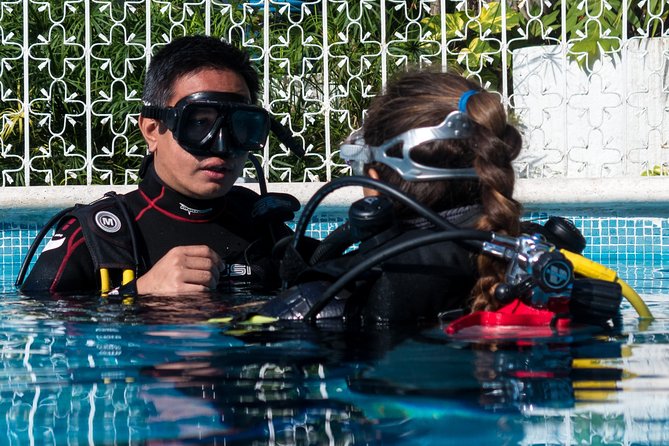
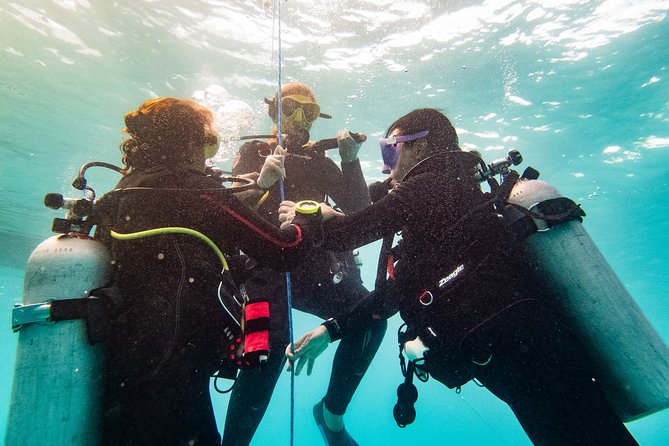
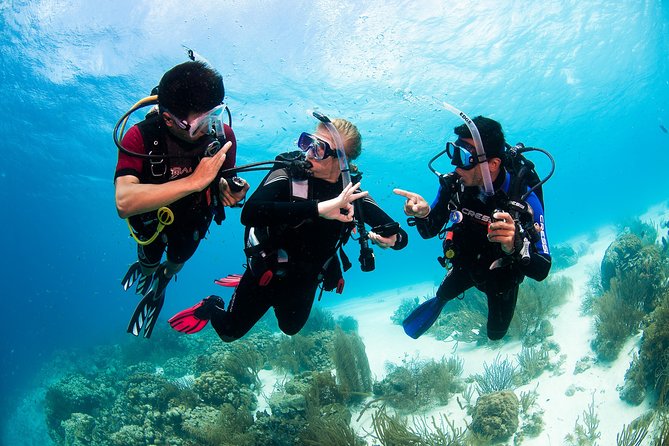
Your day begins with a briefing from an SDI instructor. You’ll learn the basics of scuba, then you’ll gear up and move straight into the pool. This is where the experience earns its name “discovery,” because you’re not just watching someone else use the equipment. You’re using it, under supervision, at a speed that fits you.
The pool section is a confidence-builder. You’ll work on core skills, and the instructor stays close as you practice what to do when something feels unfamiliar. A lot of first-timers worry they’ll freeze once they get in the ocean. The pool time is the counterweight to that fear. In multiple accounts, instructors like Coral and Alma were described as patient and thorough, taking time with beginners who needed extra support.
Group size is capped at four, which is a big deal here. In a small group, the instructor can actually notice when you’re struggling with breathing rhythm or buoyancy control and adjust right then. One of the clearest themes in the feedback is that instructors stayed focused on the student’s comfort level, including nervous water moments.
You’ll also complete required eLearning materials before you go. The tour includes those materials, which helps the morning feel structured. You don’t have to show up from zero, and that reduces the “what am I supposed to do?” panic.
Two Reef Sessions Up to 40 Feet: What You’ll See
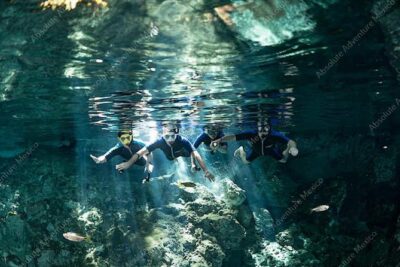
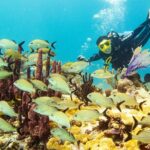
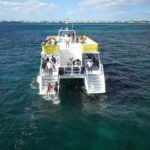
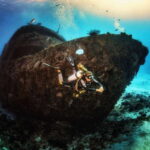
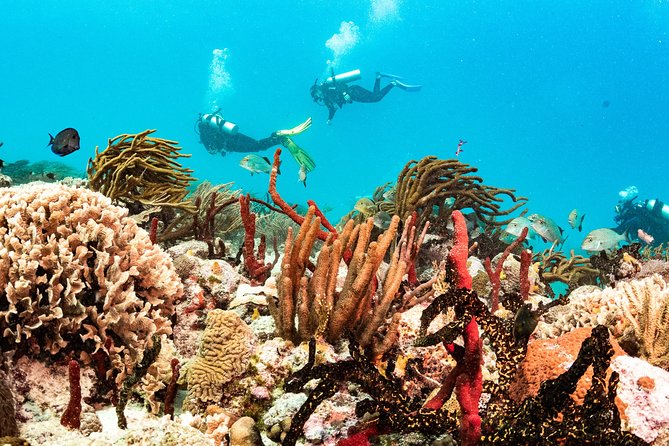
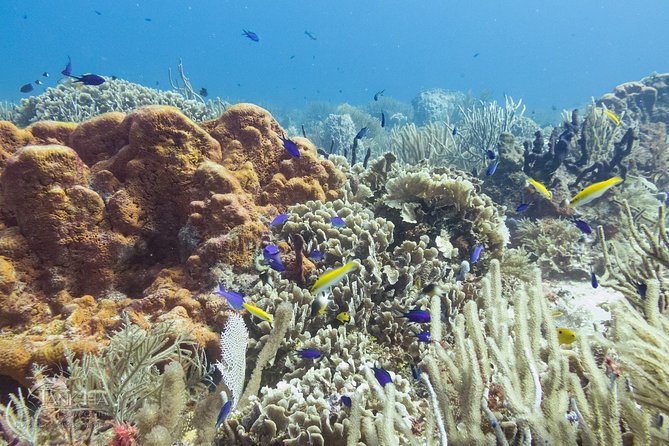
After lunch break time, you head out by boat to do two reef sessions on two different coral reefs. The maximum planned depth is 12 meters / 40 feet, and each session is typically 40–60 minutes depending on skill and comfort. That depth is a sweet spot for beginners: deep enough to feel like you’re really part of the underwater world, but not so deep that everything becomes harder to manage.
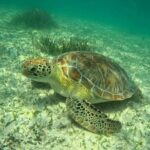
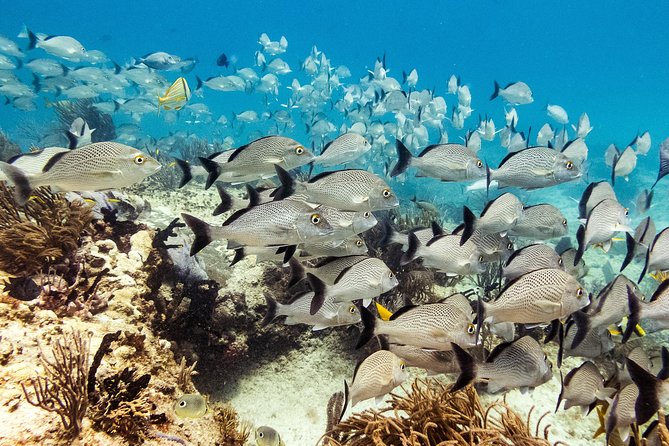
What you see can vary day to day, but you can reasonably expect a lot of tropical fish and colorful coral. The experience notes that you might see moray eels and turtles, and that matches the pattern from the accounts you provided, where eels and turtles show up more than once. You may also spot rays (including stingrays and eagle ray), along with creatures like parrotfish, pufferfish, and even an occasional sea snake or barracuda. If you’re hoping for a specific animal, I’d treat it as a bonus, not a guarantee, but the variety sounds excellent.
One practical thing I’d underline from the instructor guidance style: equalizing pressure. A reviewer tip you should take seriously is to blow harder than you think you need to when you start descending. If you’ve ever had a “my ears won’t pop” moment on a plane or in water, this is the kind of step that can make or break your comfort on the way down. Good instruction usually fixes that fast, but you still want to be ready for it.
Also, don’t judge the whole day by your first few minutes underwater. In at least one story, a beginner had a hard time on the first open-water session and chose to skip it, then got the support needed to succeed on the second session. That flexibility is part of what makes this good for beginners: the instructors aren’t trying to force confidence. They help you build it.
You can also read our reviews of more scuba diving tours in Playa del Carmen
Small Group, Big Support: Instructors Who Slow Down for You
For first-timers, the best equipment in the world won’t help if you’re rushed. This is why the small group cap (four travelers max) matters. With fewer people, your instructor can stay with you, explain what you’re doing as you’re doing it, and respond in real time.
In the feedback, instructors like Coral, Alma, Julian, Alonzo, Joaquin, Boris, and Paul are repeatedly described as calm, patient, and very focused on safety. That matters most when a student gets stuck on a basic step—like breathing comfortably, clearing water, or getting comfortable hovering rather than panicking.
One theme stands out: holding your hand, literally or figuratively, when you need it. There are accounts of instructors staying close, guiding a nervous beginner through their first successful open-water moment, and adjusting pace so the student could enjoy the underwater experience instead of just surviving it.
Another helpful detail: you might feel cautious in rougher conditions. While the tour depends on good weather, there’s no “fake it until it works” attitude. If water conditions are challenging, the staff supports you and keeps decisions grounded in comfort and safety. That’s also why it’s smart to go in with a mindset of learning rather than proving something.
Gear, Fees, and What’s Included in the $150 Price
Let’s talk value. The price is $150 per person for an all-day outing (about 8 hours). What makes it feel fair isn’t just the ocean time—it’s what’s bundled.
Included items:
- Use of full scuba equipment (mask, fins, tank, jacket, weights, and the rest you need)
- Bottled water in reusable bottles served in reusable plastic cups
- Pool entrance fees
- Required eLearning materials
So you’re not lining up rentals, buying a bunch of extras, or paying separate pool fees. For many travelers, that’s the main cost-saving. For a first attempt at scuba, you’ll be thankful you didn’t have to figure out gear sizes or figure out how anything fits together.
Two things to watch. First, hotel pickup is not included. You’ll need to get to the meeting point on your own or arrange transportation in advance. They’ll tell you the price for round-trip transportation if you ask.
Second, lunch isn’t included. You’ll get a break where you can grab lunch from nearby stores. That’s normal for a day like this, but plan for it so you’re not scrambling when you’re hungry.
Where the Day Starts in Playa del Carmen and How to Plan It
The meeting point is Tank-Ha on Avenida 1 Manzana y 24 entre Calle 22 Norte, Centro, 77710 Playa del Carmen. Start time is 9:00 am, and the activity ends back at the meeting point.
A few planning notes that will help:
- You’ll do pool training first, so wear something you can change into for water practice.
- Bring a camera plan if you care about photos. One strong piece of advice from the accounts: take an underwater camera if you want a permanent memory.
- You’re near public transportation, which is useful if you’re not staying right nearby.
Transportation to the boat area is handled by the provider. The key point is that you only need to get yourself to the dive center base. From there, the staff manages getting you to and from the water.
If you’re prone to anxiety around water, plan your morning like you’re going to a skill lesson, not a performance. Eat something beforehand if your schedule allows. Hydrate. Then let the pool work do its job: get your bearings fast, so the ocean feels like the next step instead of a trap door.
Health Checks You Can’t Skip: Medical Fitness for Scuba
This experience requires you to be medically fit for scuba. If you have any medical conditions that could affect underwater safety, check before you go. The tour provides a medical eligibility link after you sign, at scubamedical.com.
This is one of those “no shortcuts” rules, and it’s there to protect you. If you’re unsure, use the medical check. If you’re cleared, you can focus on the fun part: getting comfortable with the gear and enjoying coral and sea life within the 40-foot max.




Should You Book This Beginner Scuba Experience?
Book it if:
- You want a first scuba attempt that starts in a pool and builds skills before you go out.
- You appreciate small groups and patient instruction, like the support described with instructors including Coral and Julian.
- You’d rather get well-guided training than just get time underwater.
Think twice or ask questions first if:
- You can’t confirm you’re medically fit for scuba.
- You need hotel pickup convenience, because you’ll arrange your own transport to the meeting point.
- You’re hoping for a specific animal. The reefs usually deliver lots of fish and coral, and you might see turtles, moray eels, and rays, but nature doesn’t do guarantees.
My take: at $150, this is strong value because it includes the gear, the pool fees, and the training time you actually need. The best part is the way instructors adapt when a beginner needs more support in the water. If you’ve been curious about scuba, this is a practical, beginner-shaped route to make it happen.
FAQ
Do I need scuba certification?
No. This is designed as a beginner introduction with pool training and then two reef sessions.
What’s the maximum depth?
The maximum depth is 12 meters / 40 feet.
How long is the tour?
The full experience is about 8 hours.
How many people are in the group?
The group is capped at a maximum of four travelers.
Is equipment included?
Yes. You’ll be provided the scuba gear you need, including items like a mask, fins, tank, jacket, and weights.
Where does it start and end?
It starts at Tank-Ha on Avenida 1 Manzana y 24 entre Calle 22 Norte, Centro, 77710 Playa del Carmen, and it ends back at the same meeting point.
Is hotel pickup included?
No. Hotel pickup is not included in the cost. You can arrange transportation separately.
Is the tour offered in English?
Yes, English is offered.
Is this safe for first-timers with little comfort in water?
It’s built for beginners with pool exercises and close instruction. The experience also notes you should have a moderate physical fitness level, and you must be medically fit for scuba.
What if weather is poor?
This experience requires good weather. If it’s canceled due to poor weather, you’ll be offered a different date or a full refund.