REVIEW · PLAYA DEL CARMEN
Cenotes diving Dos Ojos and The Bat Cave
Book on Viator →Operated by Diversland Mexico · Bookable on Viator
Cenote scuba feels like stepping into another world. I like the on-time hotel pickup from Playa del Carmen and Playacar, and I also love how the guides focus on a calm, confidence-building scuba briefing before you go in. The main drawback to plan around: this is for people with basic certification—if you do not have it, you can still join with snorkeling, but you won’t be doing the certified scuba portions.
You’ll get two very different cenote experiences on the same trip. Dos Ojos mixes bright, open cavern sections with darker tunnels, and The Bat Cave adds that eerie, bat-focused atmosphere. It’s also the kind of outfit that feels organized behind the scenes—Ana runs logistics, Dima brings humor and teaching energy, Patrick is the familiar anchor, and Elana is the name you’ll hear when people need a patient refresher.
In This Review
- Key things I’d circle on your map
- Playa del Carmen pickup to Dos Ojos: what your 8:00am actually means
- Dos Ojos Cenote: Barbie Line light, then Bat Cave darkness
- The Barbie line: illuminated, airy, and formation-heavy
- The Bat Cave line: darker tunnels, low light, and a bat air cave
- The Bat Cave cenote: where darkness and tunnels become part of the show
- If you skip certified scuba: snorkeling still keeps you in the story
- How the guides make it feel safe and smooth (Patrick, Ana, Dima, Elana)
- Equipment, tanks, and what the $210 covers (and what costs extra)
- Certification rules and health checks: plan ahead so your day isn’t derailed
- Where you’ll spend time: the real flow of the day
- Price, value, and whether this matches your style
- Should you book Cenotes at Dos Ojos and The Bat Cave?
- FAQ
- What time does the tour start, and how long does it last?
- Is hotel pickup included?
- Do I need scuba certification?
- What if I don’t want certified scuba?
- What scuba equipment is included, and what costs extra?
- Is there a minimum age or health screening?
Key things I’d circle on your map
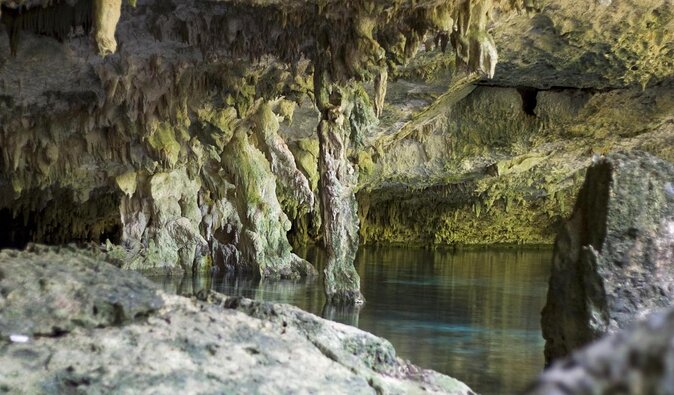
- Two cenotes, two moods: bright “Barbie line” light versus darker Bat Cave tunnels
- Beginner-friendly conditions for certified participants: clear, shallow waters and instruction on hand
- Snack and rest time between your water sessions: you’re not rushed end-to-end
- Private group setup: only your group, with a private instructor for families/groups
- Snorkeling is an option: if you skip certified scuba, you’re still part of the day
Playa del Carmen pickup to Dos Ojos: what your 8:00am actually means
This trip runs about 5 hours total, starting at 8:00am. If you’re staying in Playa del Carmen center or Playacar, pickup is included—so you’re not hunting down transportation at dawn. The activity ends back at the meeting point as well, so the day is built to feel like a clean loop.
The meeting point is Plaza Palmeiras, C. 11 Sur, Ejidal, 77712 Playa del Carmen. Even though pickup is offered, I still treat meeting points as a backup plan—having that address lets you stay calm if timing gets adjusted due to hotel location.
In practice, this kind of morning structure matters. Cenote routes are time-dependent, and you’ll get the best experience when you’re not arriving late, wet, and stressed. The best version of this day is simple: arrive, gear up, get your bearings fast, and then focus on the water and the rock formations.
You can also read our reviews of more scuba diving tours in Playa del Carmen
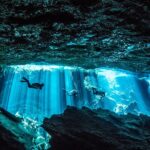
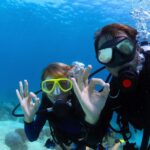
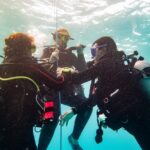
Dos Ojos Cenote: Barbie Line light, then Bat Cave darkness
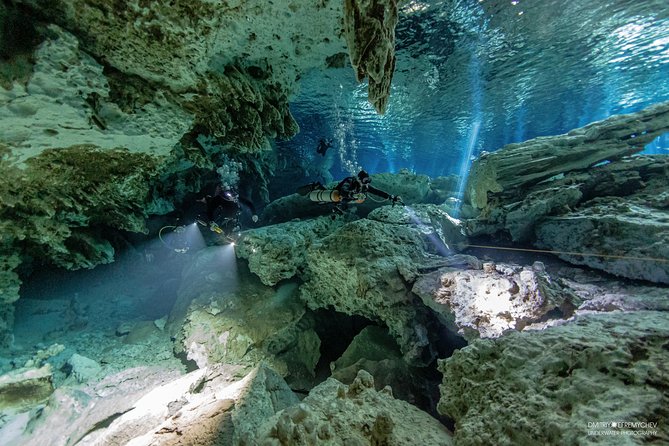
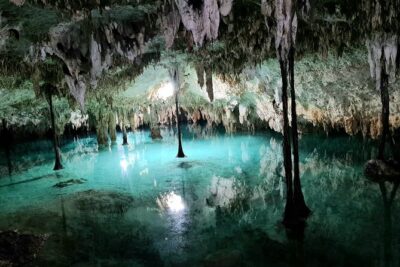
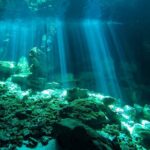
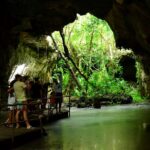
Dos Ojos is named for two caverns that feel like they’re close together, tied together by a common area. What makes it special for you is that the cenote delivers two distinct “character” sections in one place—so you’re not doing the same looking loop twice.
The Barbie line: illuminated, airy, and formation-heavy
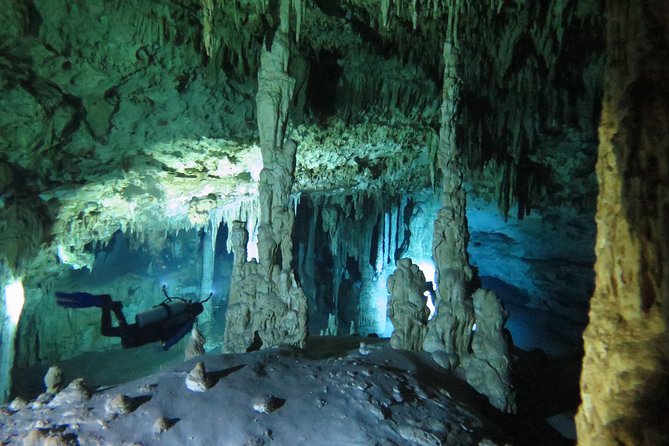
The Barbie line is the bright side. There’s lots of light, open space around huge stalactites and columns, and generally a more spacious feeling as you move through the area. If you like being able to see your surroundings clearly—rather than feeling swallowed by darkness—this section is your comfort zone.
This is where you’ll likely notice the scale. The tour description emphasizes massive stalactites and stalagmites, plus the feeling that the shapes have been shaped over millions of years. You don’t need to be a geology nerd to appreciate what “columns” look like down there; your eyes will do the work fast.
The Bat Cave line: darker tunnels, low light, and a bat air cave
Then you shift into the Bat Cave line. Here, some parts are very low light, and the route includes tunnels and rooms. The result is a more cave-like feeling—less open, more enclosed, and more atmospheric.
This is the segment that leans into your senses. Low light changes how you perceive motion, and the tunnel layout means you’ll likely slow down and pay attention to your guidance and buoyancy. It’s not about being scared; it’s about being present.
The Bat Cave line leads around an air-filled bat cave, and the plan includes ascending to see bats and decorations. If you’re chasing that unmistakable “cenote magic” moment, this is the part that delivers the story—stalactites and tunnels are cool, but seeing the bats at the top is what turns it into a memory.
The Bat Cave cenote: where darkness and tunnels become part of the show
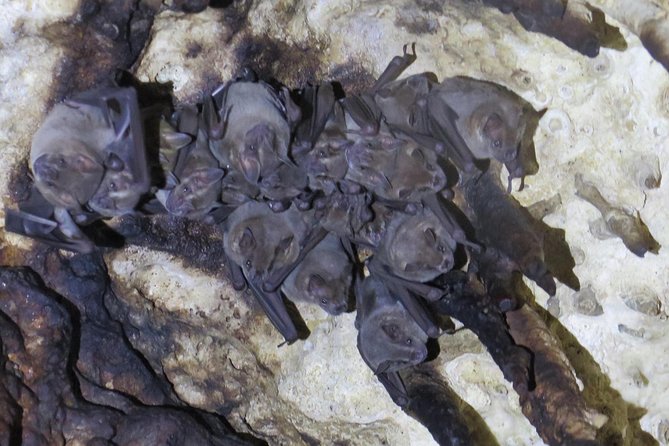
Your second cenote is The Bat Cave. Even before you go in, you’re already carrying context from Dos Ojos—so you’ll feel the contrast more clearly. The Bat Cave atmosphere is described as cave-like with low light and areas connected through tunnels and rooms.
What I like about pairing Dos Ojos with The Bat Cave is that you get variety in one afternoon without changing your hotel plans. You’re not doing a “drive, wait, and hope” day. You’re doing two scheduled water sessions with a break in between, which is exactly how you want it when you’re balancing comfort and curiosity.
Also, the trip isn’t only about rock shapes. Inside the cenote environment, flying bats are part of what you’re there for. That’s why The Bat Cave feels like more than just a prettier swim. It has that living component, where your surroundings react to nature.



If you skip certified scuba: snorkeling still keeps you in the story
Not everyone in your group will want certified scuba that day, and this tour has a straightforward option. For people who don’t do the certified scuba portion, snorkeling in the cenote is offered.
This matters because it prevents the common problem where non-scuba participants end up sitting around, waiting, or missing the main event. Here, you can still experience the cenote visuals—stalactites and stalagmites are what sell Dos Ojos, and snorkeling keeps you close to the same magic, just without the gear-and-training layer.
One caution: this depends on conditions and your comfort in water. The information provided makes clear the scuba option requires basic certification and proof. Snorkeling is offered, but the details of how the snorkeling route is handled aren’t spelled out—so ask before you book if your group includes someone who prefers a fully guided snorkel versus a more independent water time.
How the guides make it feel safe and smooth (Patrick, Ana, Dima, Elana)
This is where the reviews and the tour setup line up. The trip is described as perfectly organized, with pickup arriving on time, good equipment, and briefing done in a way that makes the actual water time feel manageable.
Guide names you may hear: Patrick is part of the team, and his group’s style comes through as professional and safety-minded. Ana handles logistics and planning, which usually means fewer surprises. Dima shows up as both hilarious and knowledgeable, and that combination is underrated—if you’re nervous, humor helps. If you’re technical-minded, knowledge keeps you calm.
There’s also mention of Elana running a refresher course with patience and clear teaching. That tells me something useful for you: if you’re certified but a bit rusty, the company supports that reality rather than acting like everyone is brand-new.
Even if you’re already comfortable, the value of a great briefing is huge in a cenote. Low light areas, tunnel sections, and buoyancy control all benefit from instruction that’s short, clear, and practical. The better the briefing, the less you have to guess once you’re underwater.
Equipment, tanks, and what the $210 covers (and what costs extra)
At $210 per person, this is not a budget add-on, but it also isn’t “pay-to-look” tourism. You’re paying for structure: two tanks, weights and belt, guide support, and hotel pickup. The tour also includes bottled water and snacks, plus all fees and taxes.
Here’s what’s included for the certified scuba portion:
- 2 tanks
- weights and belt
- bottled water and snacks
- hotel pickup (Playa del Carmen center & Playacar)
- a professional multilingual guide
- 2 scuba sessions in 2 different cenotes
- all fees and taxes
What’s not included:
- scuba insurance (optional)
- equipment rental is available for $15/day
The biggest value lever for you is the two-cenote format. You’re getting Dos Ojos and The Bat Cave in one trip, so you’re not paying twice for transfers and setup. The included gear also reduces friction. If you show up and everything is handled, you’ll spend your attention on the actual formations and bat sightings—where the payoff is.
Certification rules and health checks: plan ahead so your day isn’t derailed
This trip requires basic certification for certified scuba participation. You’ll need evidence from all certified participants, listed as Open Water Diver PADI or equivalent. If you can’t provide proof, you can’t join the certified scuba portion—though snorkeling is offered for non-scuba participants.
The minimum age is 15 years for cenote scuba participation. There’s also a health questionnaire required for everyone who joins the certified scuba activities. If you have pre-existing medical conditions such as asthma or heart conditions, diving may be prevented—so it’s smart to talk to your doctor if you’re unsure.
One more planning rule that people often overlook: it’s not recommended to do scuba within 24 hours of flying. If your travel schedule includes a recent flight, build in buffer time.
Also, this is a private tour/activity, meaning only your group participates. That’s a real plus if you’re traveling with family or friends who want a more personal pace, especially because the tour notes that groups or families can have their own private instructor.
Where you’ll spend time: the real flow of the day
Because the trip is about two separate cenote experiences over roughly five hours, the rhythm matters. You can expect:
1) pickup in the morning and arrival at the cenote area
2) gear and a scuba briefing
3) a first water session in Dos Ojos
4) a rest break with snacks
5) a second water session in The Bat Cave
6) return to the meeting point
The included snacks and rest time are not just comfort—they help you feel human between sessions. Cenotes can be cool, and low-light areas can make you work a bit more mentally. A break keeps the whole experience enjoyable rather than “one long effort.”
If you’re with people who are new to this world, the beginner-friendly angle is that Dos Ojos has clear, shallow waters and the team offers instruction. That’s the difference between “we said easy” and “the guide actually has you covered.” This tour is set up so you’re not on your own.
Price, value, and whether this matches your style
For $210, you’re buying:
- a structured schedule (not an open-ended day)
- hotel pickup in the key areas
- two tanks and key weighted gear
- two cenotes in one tour
- snacks, water, and guide support
- private group operation
If you’re comparing options, the best way to judge value is to ask: are you paying extra for each cenote stop, each tank, or each staff-led component? Here, many of those basics are included, which makes the total feel more straightforward.
This tour also makes sense if you want a more authentic cenote experience than a quick photo stop. Dos Ojos’ “Barbie line” vs Bat Cave line structure is exactly the kind of variety that keeps your eyes busy, and The Bat Cave’s bat-focused atmosphere gives you a strong payoff at the end of the day.
Should you book Cenotes at Dos Ojos and The Bat Cave?
Book it if you want a well-run, private-group cenote day with two very different cenote atmospheres, included tanks, and pickup that keeps mornings easy. It’s a great choice when your group includes people who might do snorkeling while certified scuba participants get their own instruction.
Consider another option if your whole group lacks certification and you’d rather not rely on the snorkeling alternative. Also think twice if you’re traveling right after a flight, or if you know you may have medical limits that could affect the health questionnaire outcome.
If your goal is clear-water beauty plus the darker bat-cave mood, this combo trip is a smart way to get both without spending your day coordinating transportation.
FAQ
What time does the tour start, and how long does it last?
The tour starts at 8:00am and lasts about 5 hours.
Is hotel pickup included?
Yes. Pickup is included from Playa del Carmen center and Playacar.
Do I need scuba certification?
Yes. For certified scuba participation, you must provide evidence of certification (listed as Open Water Diver PADI or equivalent).
What if I don’t want certified scuba?
For people who don’t do the certified scuba portion, snorkeling in the cenote is offered.
What scuba equipment is included, and what costs extra?
Included are 2 tanks, weights, and a belt. Equipment rental is available for $15/day. Diving insurance is not included (it’s optional).
Is there a minimum age or health screening?
Yes. The minimum age is 15 years for cenote scuba participation, and you’ll complete a health questionnaire before diving.