REVIEW · PLAYA DEL CARMEN
Cenote Diving – 2 Tank Dive Trip for Certified Divers
Book on Viator →Operated by Scuba Mobile Dive Center · Bookable on Viator
Cenotes feel like another planet. This 2-tank cenote cavern trip from Playa del Carmen takes you into systems such as Chac Mool or Dos Ojos, guided by someone with full cave training and Open Water instructor credentials. I love the clear briefings and the fact that you follow permanent lines, so navigation feels more controlled. I also love the long surface pause with refreshments, snacks, and even a sandwich. One thing to plan for: camera rules vary by cenote, and extra fees can apply.
The day runs smoothly: you start at 8:00 am, get fitted with gear, then head about 45 minutes by truck to the chosen cenote. Each underwater session runs around 45 minutes, with an about 45-minute surface interval in between, before you’re back around 3:30 pm. With a maximum group size of 8, you’ll usually get more hands-on attention than on big tours.
This trip is for people with real scuba experience, not first-timers. You’ll need Open Water certification and proof that you’ve done a recent training or water session within roughly the last 6–12 months, plus a moderate fitness level for the day’s gear-up and swim time. If that timing doesn’t match your logbook, you’ll want to sort that out before you book.
In This Review
- Key things that make this trip work well
- Meeting at Playa del Carmen and getting kitted up
- Truck ride to Chac Mool or Dos Ojos (and why it matters)
- How the permanent lines shape your experience underground
- Your first 45-minute underground session: pacing and expectations
- Surface interval: snacks, a sandwich, and real reset time
- Second 45-minute underground session: what changes after the break
- Price and what actually affects your total on the day
- What to bring (and what to leave at home)
- Who this trip fits best (and who should think twice)
- Should you book the 2-tank cenote cavern trip?
- FAQ
- What time does the experience start and end?
- How long is the overall experience?
- What’s included in the trip?
- What equipment rental costs extra?
- Are cenote entrance fees included?
- Can I use a camera?
- What are the requirements to participate?
- What happens if the weather is bad?
Key things that make this trip work well
- Permanent lines inside the caverns help keep the experience structured and less stressful
- Two sessions at about 50 feet / 15 meters max keep things in a manageable training range
- Full briefing from a cave-trained guide means you’ll know the rules of the space before you go in
- ~45-minute surface interval with snacks and a sandwich gives you real recovery time
- Small group size (up to 8) helps the pace feel calm, not rushed
Meeting at Playa del Carmen and getting kitted up
You’ll meet at Calle 4 Norte (Centro, Playa del Carmen) and start at 8:00 am. The first part is paperwork and a gear fit check, which matters more than people think—cavern systems are strict about buoyancy, trim, and comfort.
After the paperwork, you’ll be fitted with whatever’s needed for your kit. The trip includes tanks and weights, plus an underwater light rental. That light is more than a “nice-to-have.” Inside cenotes, visibility can change fast depending on water conditions and what direction you’re facing, so having the right light setup is part of staying comfortable.
If you don’t have your own scuba equipment, note what’s not included: a full set rental runs 25 USD. That full set is listed as BCD, regulator, dive computer, wetsuit, and mask & fins. So, when you estimate your real total cost, you’ll want to figure out whether you’re traveling with your own gear or doing the full rental.
A practical tip: if you’re bringing your own computer, make sure you’re used to how it works. The trip includes a fixed schedule, and the guide briefing will set the expectations for timing and procedures.
You can also read our reviews of more scuba diving tours in Playa del Carmen

Truck ride to Chac Mool or Dos Ojos (and why it matters)
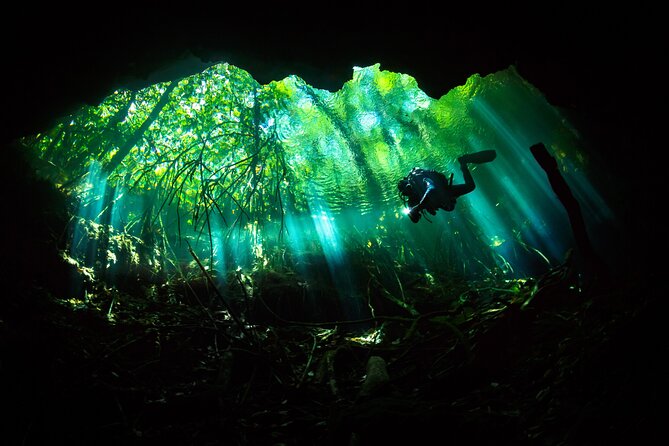
Once you’re kitted, you’ll get into a truck for about a 45-minute ride to the cenote selected for the day. The location can change between major options like Chac Mool and Dos Ojos, and that choice affects both the experience and the extra costs.
Your guide will then run an environment briefing at the cenote before you start. This is one of the most valuable parts of the day because cavern rules are not “vibes-based.” You’ll be taught what to watch for and what procedures to follow in this specific space.
Why the truck ride is part of the value: it puts more of the day’s effort into the water time and less into logistics. Also, choosing a cenote based on conditions (and operator planning) usually means better flow on the schedule.
How the permanent lines shape your experience underground
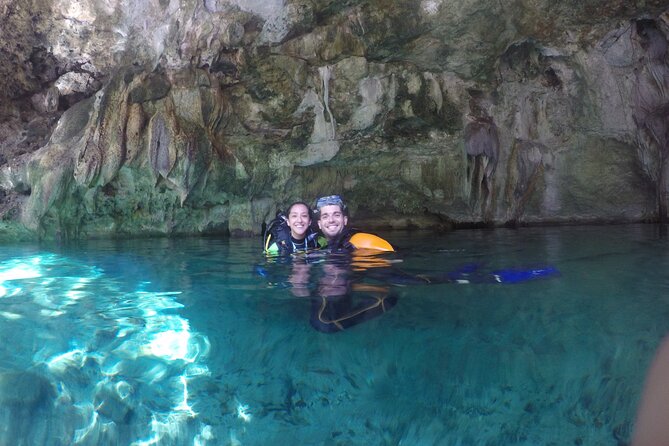
Inside the cenote, the core structure of the trip is the use of permanent lines. For you, that means you’re not relying on your own fin-kicks and hand waving to find your way. You follow the line route set up inside the caverns, guided by the briefing and the lead during the session.
The tour also lists a max depth of 50 feet / 15 meters. That’s an important detail for planning because it helps you gauge air consumption and comfort. It also means you’re operating within a range where many Open Water certified scuba participants can do the work safely—assuming they’re comfortable with buoyancy and basic equipment control.
You’ll have each underwater session for about 45 minutes. In training terms, that’s long enough to feel the environment and short enough to stay controlled. The guide briefing will cover the procedures for the space, and the line system reduces the mental load of navigation.
A key consideration: cenotes are privately owned, and conditions can vary. That’s one reason the schedule stays guided and structured. The tour’s whole design is about keeping the experience repeatable and manageable for certified participants.
Your first 45-minute underground session: pacing and expectations
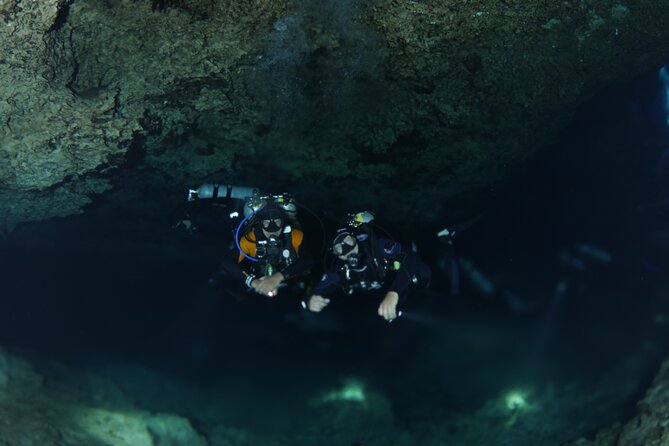
After the briefing, you’ll start the first underwater session. Expect it to feel controlled rather than exploratory. You’re following fixed lines inside cavern sections, with a guide who’s there to keep the group moving and the procedures on track.
The setup usually feels like this:
- Gear stays settled and buoyancy-focused.
- You move along the line route during the planned 45-minute window.
- Your guide manages spacing and timing so no one gets left behind.
The 45-minute length is a sweet spot. It’s not so short that you spend the whole time adjusting. At the same time, it’s not so long that you’ll turn the trip into an endurance contest.
If you’re someone who gets anxious underwater, this structure is a big help. You’ll still have to focus, of course, but the navigation uncertainty is reduced because the route is set up.
Surface interval: snacks, a sandwich, and real reset time
After the first session, you’ll come back up and have a surface interval of around 45 minutes. This break is not filler time. It’s when you refuel, hydrate, and let your breathing and body calm back down.
The included refreshment list is clear: you’ll get water and soft drinks, plus snacks and a sandwich. This matters because two underwater sessions in one day can be tiring, even when the max depth stays modest.
Use the break smartly:
- Eat something you know you tolerate well.
- Keep sipping water and soft drinks rather than chugging.
- If you’re adjusting gear or buoyancy issues, do it during this window.
Also, remember your light and any gear checks are easier when you’re not rushed. A good surface interval can be the difference between a second session that feels smooth and one that feels like you’re fighting fatigue.





Second 45-minute underground session: what changes after the break
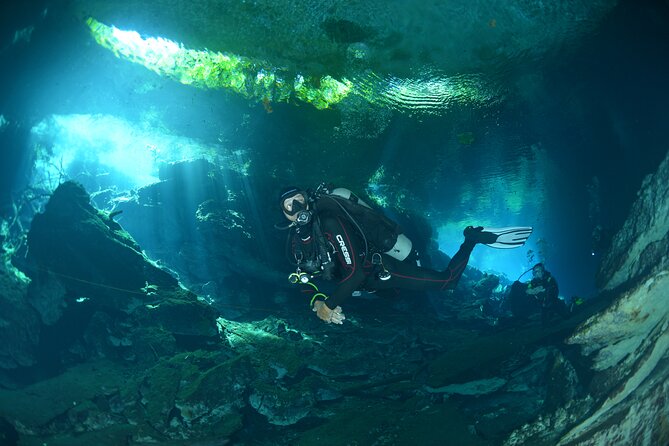
The second underwater session starts after the surface interval. Many people find this one a bit easier because you’ve already learned the feel of the space and the routine. The group still follows the same permanent-line approach, and the guide will keep the pacing consistent.
This is also when good buoyancy habits become obvious. After you’ve been underwater once, any creeping discomfort—tight wetsuit areas, a strap issue, a regulator adjustment you didn’t love—shows up faster. The included structure helps, though: the guide briefing and line route keep things consistent.
From a value perspective, the two-session format gives you enough time to actually experience the cenote without rushing. You’re not just doing a quick taste. You’re getting a real chunk of the cavern environment twice, with time in between to recover.
Max depth remains listed at 50 feet / 15 meters for these sessions, so you can plan your air usage around that expectation.
Price and what actually affects your total on the day
Your base cost depends on what you booked, but the day’s pricing has a few add-on pieces that can change what you end up paying.
Included basics:
- 2 underwater sessions at one cenote
- Tanks and weights
- Roundtrip transportation from the scuba center
- Water and soft drinks
- Snack and sandwich
- Underwater light rental
Common extras you should budget for:
- Full scuba equipment rental: 25 USD (if you need BCD, regulator, dive computer, wetsuit, mask & fins)
- Cenote entrance fees: cash only
- Chac Mool: 300 MXN
- Dos Ojos: 600 MXN
- Camera use: policies vary
Some cenotes don’t allow camera use. Others charge an extra camera fee that ranges from 20 USD to 60 USD depending on the camera.
Here’s the value math: this trip already includes tanks, weights, transport, and light rental—so you’re not paying for the biggest “must-haves.” But once you add entrance fees and any camera or equipment needs, your total can climb. If you’re traveling light and skipping camera gear, the day is usually simpler financially.
My practical advice: decide early whether you’re bringing a camera. If you are, ask ahead how camera use is handled at your likely cenote, because private ownership rules can be strict.
What to bring (and what to leave at home)
You’ll be dealing with a long day, two underwater sessions, and gear you may or may not rent. You don’t need a huge “adventure kit,” but you do want to show up prepared.
Bring:
- Your Open Water certification proof
- Proof you’ve done recent scuba experience in the last 6–12 months (the requirement is stated as within about 12 months)
- Cash for cenote entrance fees (cash only is explicitly stated)
- Your own scuba computer if you have one (otherwise it’s included in the full set rental)
If you’re bringing a camera:
- Plan for possible extra fees
- Be ready for cenotes that may not allow camera use at all
Leave at home:
- Anything you don’t want to risk getting wet or lost during gearing and surface breaks
One more note: the tour notes a moderate physical fitness level. That doesn’t mean you need to be an athlete, but you do need to be comfortable with a full day schedule and two sessions worth of effort.
Who this trip fits best (and who should think twice)
This is best for people who already have Open Water certification and have been active recently. The guide training and cavern setup are designed for a controlled experience, but the environment still demands calm underwater skills—good buoyancy, basic equipment comfort, and the ability to follow procedures.
If you’ve been out of the water for a while, don’t assume you can wing it. The tour requires recent experience, and that requirement is there for a reason.
This trip also suits people who enjoy structure. If you like clear routes, fixed lines, and a step-by-step day plan, you’ll likely feel relaxed. If you’re expecting a loose, wander-anywhere style of experience, you may prefer a different format.
Group size is limited to 8, which usually helps the guide manage pace and spacing. If you’re comfortable in small groups, this is a plus.
Should you book the 2-tank cenote cavern trip?
I’d book it if you want a well-structured cavern experience with fixed lines, two underwater sessions, and enough recovery time to actually enjoy the second one. The included transport, tanks, weights, light rental, and food on the break are real value—especially compared to day trips where you end up paying for every basic item separately.
Skip or delay booking if:
- Your Open Water certification is out of date for the recent-experience requirement
- You need camera-friendly rules guaranteed
- You don’t want to handle cash entrance fees
For most Open Water scuba participants in Playa del Carmen who can meet the timing and recent-activity requirement, this is a strong choice. The format is controlled, the guide is properly qualified for the environment, and the day gives you two chances to connect with the cenote world without turning it into a frantic endurance test.
FAQ
What time does the experience start and end?
It starts at 8:00 am and you return to the meeting point at about 3:30 pm.
How long is the overall experience?
The total duration is about 7 hours.
What’s included in the trip?
The trip includes 2 underwater sessions at one cenote, tanks and weights, roundtrip transportation, water and soft drinks, a snack and sandwich, and under-water light rental.
What equipment rental costs extra?
A full scuba equipment rental set costs 25 USD and includes BCD, regulator, dive computer, wetsuit, mask & fins.
Are cenote entrance fees included?
No. Cenote entrance fees are extra and paid in cash. Chac Mool is 300 MXN and Dos Ojos is 600 MXN.
Can I use a camera?
Camera policies vary by cenote. Some cenotes don’t allow camera use, and others charge a camera fee ranging from 20 USD to 60 USD depending on the camera.
What are the requirements to participate?
You must have Open Water certification from a recognized agency and have done a scuba session within the last 6–12 months (the requirement is stated as within the last 12 months). You’ll also need a moderate fitness level.
What happens if the weather is bad?
The experience requires good weather. If it’s canceled due to poor weather, you’ll be offered a different date or a full refund.