REVIEW · PLAYA DEL CARMEN
PADI Open Water Diver Course in Playa del Carmen
Book on Viator →Operated by ScubaCaribe Mexico · Bookable on Viator
Certification happens faster than you expect. I love the time-saver of completing the PADI Touch eLearning theory and exam online before you arrive, and I also love how the course keeps you in small groups (max 8) with plenty of staff support. One downside to plan for: food and drinks are not included, so you’ll want to budget for meals around your training days.
Playa del Carmen is a smart home base for water training, because you get to focus on the skills first and then head out for open-water boat sessions off the Riviera Maya. The goal is simple: learn core scuba basics, practice them in a controlled setting, then use them while enjoying real reef scenery like coral areas and sea turtles.
Before you go, you’ll handle the admin that makes the whole course run smoothly. You’ll register for PADI eLearning by sharing your full name (including middle initials), date of birth, preferred language, email, and a yes/no fit-for-diving check via the medical questionnaire.
In This Review
- Key highlights to know before you book
- Why Playa del Carmen fits the PADI Open Water Diver pace
- Price and value: what $590 actually buys you
- The course structure: how you go from nerves to control
- Phase 1: knowledge development (start before you arrive)
- Phase 2: confined water skills (pool work that builds confidence)
- Phase 3: open-water sessions (apply skills off the Riviera Maya)
- A realistic day-by-day flow (and what each step is really for)
- Before your trip: handle the eLearning so you start strong
- Day 1 to Day 2: pool sessions and skill repetition
- Last part of the practical course: four open-water boat outings
- ScubaCaribe setup: meeting point, pickup, and keeping things simple
- What the instructors do well here: safety plus patience
- What you can see: reef life, sea turtles, and the 18m reality
- Who this course is best for (and who should think twice)
- You’ll likely be a great match if you:
- Consider thinking twice if:
- Should you book the PADI Open Water Diver course in Playa del Carmen?
Key highlights to know before you book
- Online PADI Touch eLearning: theory and exam completed at your pace before arrival
- 5 confined water sessions in the pool so you build comfort step by step
- 4 open-water boat sessions along the Riviera Maya with reef-and-marine-life focus
- Small-group limit (8 maximum) for more personal attention
- Professional PADI instruction in multiple languages (English, Spanish, and others on request)
- Playacar meeting coordination: share your hotel name so pickup points match exactly
Why Playa del Carmen fits the PADI Open Water Diver pace
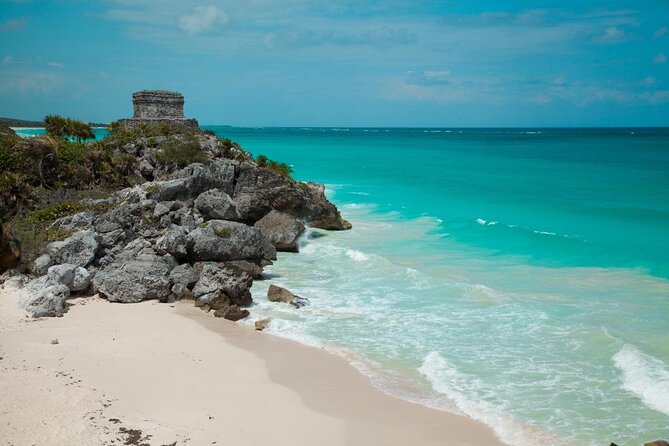
Playa del Carmen sits right where lots of divers want to train: warm-water access, easy logistics for getting to the coast, and a steady stream of boats heading out along the Riviera Maya. That matters, because your Open Water Diver course is not just about seeing marine life. It’s about learning how to stay calm, controlled, and aware in the water—then applying that knowledge in a real open-water setting.
What I like about this setup is that the course balances two needs you have on vacation. You want a schedule that is intense enough to finish quickly, but you also need the breathing room to repeat skills until they feel natural. The format here is built for that: online theory first, then pool practice, then four open-water boat sessions.
If you’re coming for a beach holiday, the training block can still fit your trip. You’re not stuck in a long program spread across weeks—you’re working through the course phases on a condensed timeline.
You can also read our reviews of more tours and experiences in Playa del Carmen.
Price and value: what $590 actually buys you
At $590 per person, this course is not a cheap souvenir. But it is fairly priced for what you’re getting—especially because it includes the things that usually add up fast: PADI certification, equipment, instruction, and the boat sessions.
Here’s the value breakdown in plain terms:
- Included instruction and certification: you’re paying for the full PADI Open Water Diver progression, not just for boat outings.
- Equipment is handled: full scuba gear is included, so you don’t need to rent or buy anything to get started.
- The course time is condensed: you finish the practical portion in about 2.5 to 3 days (the total is listed around 3 days 4 hours).
- The eLearning part is a major time saver: completing theory and the exam online before arrival can save at least 1 to 1.5 days. That can be the difference between making your vacation plans work or feeling rushed.
The one value trade-off to remember is also the one “gotcha” people often forget: food and drinks are not included. You’ll want to factor in meals between pool sessions and boat days.
The course structure: how you go from nerves to control
This PADI Open Water Diver course follows the standard three-phase progression, but the way it’s managed here makes it feel efficient.
Phase 1: knowledge development (start before you arrive)
You begin with PADI Touch eLearning. After you provide your details and complete the fit-for-diving step through the medical questionnaire, you’ll get a welcome email from PADI with digital documents and instructions. The big advantage is control over your schedule. You can do the theory and exam at your own pace before your first training day.
For many people, this removes stress. Instead of trying to absorb scuba basics while your vacation is already moving fast, you arrive with the groundwork done.
Phase 2: confined water skills (pool work that builds confidence)
Next comes the confined water portion: 5 pool sessions at the training location. This is where you practice the core skills that help you stay comfortable and safe. You’re learning procedures and movements without the extra variables of waves, currents, or open-water visibility.
This phase is also why the course feels manageable. You aren’t thrown into the deep end of the curriculum. You learn, repeat, and settle your body into the routine.
Phase 3: open-water sessions (apply skills off the Riviera Maya)
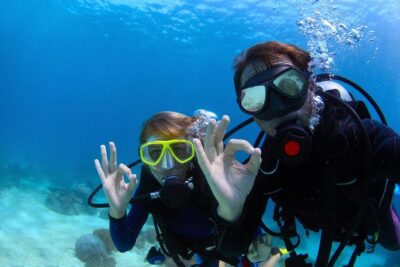
Finally, you get 4 open-water boat sessions. This is where you use what you practiced and explore the underwater world at depths up to 18m / 60ft with your dive buddy.
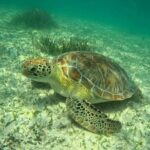
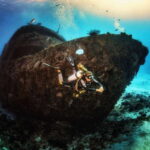
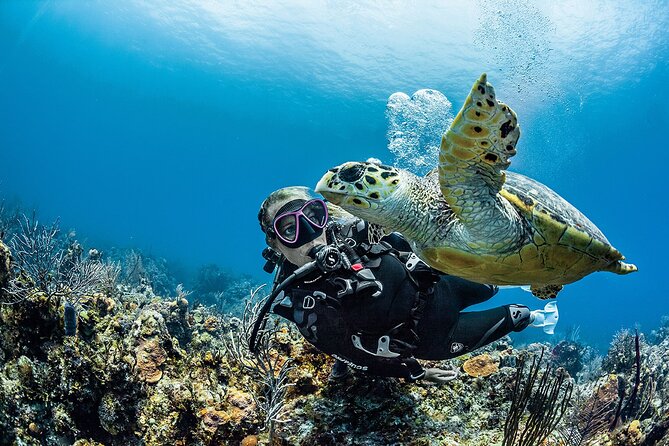
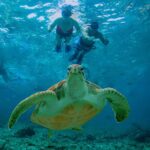
The highlights here are very specific: you’ll be out in reef country with the chance to see coral reef areas and sea turtles. In real life, the experience often depends on conditions, but you can expect a genuine step up from the pool.
A realistic day-by-day flow (and what each step is really for)
The overall schedule is listed as about 3 days and 4 hours. In practice, your time is split between eLearning setup and the condensed practical sessions once you’re on site.
Before your trip: handle the eLearning so you start strong
The best part of this course is what happens before your first morning at the center. You register for PADI eLearning after submitting your information. If you do this early, you’ll walk into the practical portion with fewer questions and less pressure to catch up.
This also gives you a clean reason to be on time. If your theory is done, your sessions focus on learning-by-doing instead of cramming.
Day 1 to Day 2: pool sessions and skill repetition
The pool portion includes 5 confined water sessions. Expect your learning to be stepwise and guided. The goal is not speed at any cost. It’s building comfort so that open-water days don’t feel like a surprise test.
One quiet benefit of pool work: you’ll learn how your breathing, buoyancy, and basic water awareness feel under equipment. That’s what turns open-water depth from intimidating to doable.
Last part of the practical course: four open-water boat outings
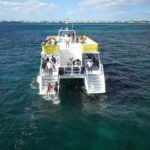
The open-water days are organized as four boat sessions along the Riviera Maya. You get to combine instruction with real scenery—coral reef habitats, sea turtles, and lots of the small marine life you can’t see while just thinking about scuba at home.
Boat days also come with a reality check. Conditions can change, and you’ll need to follow staff guidance about safety and comfort. If you’re prone to motion sickness, it’s smart to plan for it, especially because boats can rock. I’d consider talking to your doctor about what’s appropriate for you before your trip if you know you get sick easily.
ScubaCaribe setup: meeting point, pickup, and keeping things simple
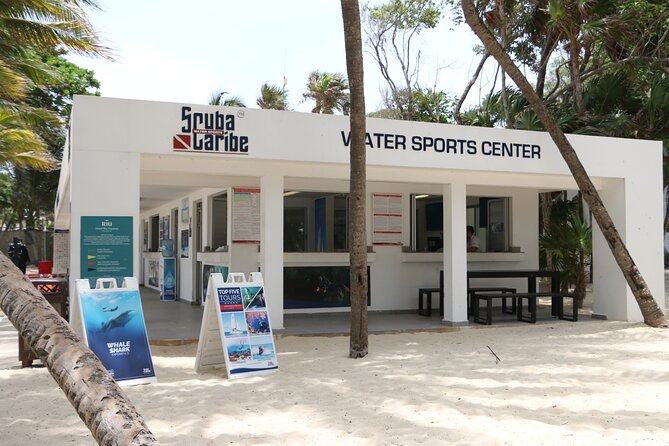
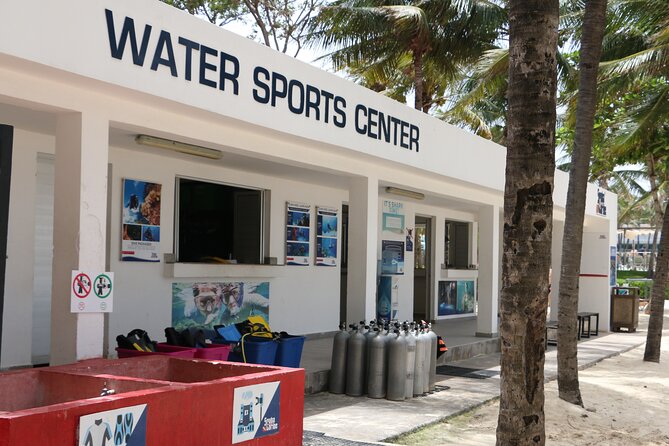
This course is run out of ScubaCaribe, and the meeting details are practical. The start point is listed at Starbucks Playacar with a specific address in Playacar. The activity ends back at the meeting point.
Pickup is offered, but there’s an important coordination note: ScubaCaribe is located in Playacar’s hotel zone. When booking, you need to state the full name of your hotel so they can give you the correct meeting point and time in Playacar. Also, you should contact ScubaCaribe at least 1 day before the activity. That step saves headaches on day one.
A couple more logistical notes that matter:
- The group is capped at 8 travelers, so you’ll likely feel less like a ticket number.
- The center lists hours on Mondays from 8:00 AM to 5:00 PM for 2025 and 2026. Your exact training days may still depend on the course schedule, but those hours are good to keep in mind when planning.
What the instructors do well here: safety plus patience
The best part of any certification course is the human part: how instructors teach, how they respond to anxiety, and how they keep you calm without rushing you. The consistent theme around ScubaCaribe is straightforward: staff prioritize safety, and they teach in a way that builds confidence.
Several instructor names come up in past experiences: Jorge, Dany, Lot, Muni, Fernando, Pierre, and Billy. I can’t promise you’ll get any specific person, but the pattern is clear. People remember the instructors for being patient and education-focused, and for helping students feel safe in every stage of training.
That patience matters most during the moments when you don’t yet feel fully automatic in the water. A good instructor doesn’t just correct you once; they help you understand why the correction matters and then give you the chance to try again until you feel in control.
It also helps that the team is set up to support different needs. For families, people have said the learning curve worked well for kids, with clear, professional instruction. For adults, people have highlighted how instructors helped them overcome fear and regain self-control through the steps they were taught.
What you can see: reef life, sea turtles, and the 18m reality
This course is designed to get you experiencing the underwater world at an appropriate beginner depth: up to 18m / 60ft. That number is important because it sets expectations. You’re not going for extreme depth adventures. You’re building a foundation for comfortable, safe awareness.
The highlights emphasize coral reef scenery and sea turtles. That alone is a big reason to take the course here instead of somewhere generic. Reef areas tend to reward even beginner buoyancy, because good viewing happens when you’re stable and relaxed.
From other ScubaCaribe experiences, people also mention marine life like fish, moray eels, and stingrays on local outings. You shouldn’t treat those as guarantees for your specific course dates, but they fit the general idea of what the region can offer.
Who this course is best for (and who should think twice)
This course has a few built-in filters that help you decide fast.
You’ll likely be a great match if you:
- Want an internationally recognized certification you can use anywhere
- Prefer to learn theory online and then focus on practice on vacation
- Like structured learning with real support in small groups
- Have moderate physical fitness and you’re comfortable following safety rules
Consider thinking twice if:
- You’re not medically cleared for scuba. The course specifically tells you to preview the medical questionnaire and obtain a doctor statement if needed.
- You plan to fly right before the training. Diving within 24 hours of flying is not recommended in the course guidance.
- You have strong motion sickness issues. The schedule includes boat sessions, so if you tend to feel sick on boats, plan ahead.
There’s also a clear age limit: minimum age is 10 years. That makes it a real option for families who want a shared certification goal.
Should you book the PADI Open Water Diver course in Playa del Carmen?
If you want the best mix of speed, structure, and scenery, this is an easy recommendation. The time-saving eLearning piece is a real quality-of-life upgrade. You’re not burning your vacation hours on theory if you do the online portion early. And once you arrive, you still get the full practical training: pool sessions for skills plus four open-water boat sessions focused on reef life and sea turtles.
Book it if:
- You want certification that’s recognized worldwide
- You like having a clear plan and guided support
- You’d rather spend your energy on learning and enjoying reef country than on figuring out equipment and logistics from scratch
You might skip it if:
- You’re hoping for a “casual, no-pressure” vacation day. This is training, with required progression and a medical check.
- You’d rather do your own schedule without coordinating eLearning beforehand.
If you do book it, do one thing that pays off immediately: complete your eLearning early and double-check your medical questionnaire. That’s the simplest way to make the practical days feel smooth, not stressful.