REVIEW · PLAYA DEL CARMEN
Cenotes 2-Tank Dive in Playa del Carmen/for certified divers only
Book on Viator →Operated by SCUBA LIBRE · Bookable on Viator
A cenote swim takes you underground fast. I like the two air tanks setup (more time in the water without rushing) and the max group size of four for closer guidance. One thing to consider: this is very cave-like, and if you get nervous in enclosed spaces, you’ll want a patient, calm guide.
You’ll leave the Scuba Libre meeting point in Playa del Carmen by car and head through dense Mayan jungle toward well-known systems like Dos Ojos and Jardin del Eden. Expect a careful briefing focused on rules and procedures, plus a surface break for a light lunch and a soft drink before you do a second underwater stop. If you’re comfortable following safety instructions and staying calm in dark caverns, this is a memorable way to see what cenotes really are.
In This Review
- Key highlights you should know before you go
- Two-tank cenote scuba in Playa del Carmen: what you’re really paying for
- Scuba Libre morning plan: timing, meeting point, and what to bring
- Cenotes 101: why these sinkholes feel so different underwater
- The car ride through the Mayan jungle before your first cavern
- Chikin Ha stop: getting oriented in a cavern system
- Cenotes Dos Ojos: a famous system and the reason many people book
- Jardin del Eden: a second different cavern before you head back
- Gear, weights, and lamps: what’s included and why it matters in cenotes
- The briefing that sets the tone: procedures first, formations second
- Who should book this and who should skip it
- Value check: $159 plus extra fees you should budget for
- Should you book this cenote program in Playa del Carmen?
- FAQ
- FAQ
- Is this cenote experience only for certified scuba divers?
- How many people are in each group?
- Where does the tour start?
- What time does it start and when does it end?
- What’s included in the price?
- What equipment is not included, and what does it cost?
- Are there additional fees besides the $159 price?
- What happens if the weather is poor or I cancel?
Key highlights you should know before you go
- Max 4 certified divers per group, so you’re not packed in with strangers
- Two air tanks included plus weights and lamps
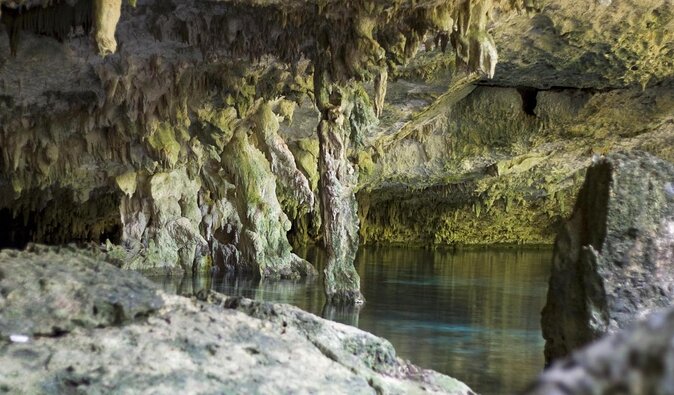
- Guided underground swim through multiple cenote systems with a structured briefing
- Stops include Chikin Ha, Dos Ojos, and Jardin del Eden for different cavern vibes
- English-speaking experience with a mobile ticket
- ~7 hours total, with a surface lunch break mid-tour
Two-tank cenote scuba in Playa del Carmen: what you’re really paying for
At $159 per person for a 2-air-tank, guided cenote program, the price makes sense when you look at what’s included and how small the group is. You’re not just buying entrance to a pretty water hole. You’re getting the gear basics (tanks, weights, lamps), a guide, and access fees built in for the cenote side—plus transportation from Playa del Carmen between stops.
The small group size is the hidden value. When there are only four certified divers, the guide can watch buoyancy and spacing more closely. That matters a lot in cenotes, where the space can feel tight and light can change quickly as you move deeper into cavern interiors.
One more value note: there are extra charges that aren’t included in the headline price (equipment rental and marine/boarding fees). I think that’s normal for cenote operators, but it’s smart to budget for it so you’re not surprised later.
You can also read our reviews of more tours and experiences in Playa del Carmen.
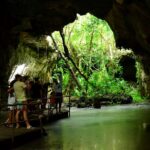

Scuba Libre morning plan: timing, meeting point, and what to bring
This program starts at 8:30 am at Scuba Libre, Calle 4 Nte Manzana 3 entre 5a avenida y zona federal maritima, Centro, 77710 Playa del Carmen, Q.R., Mexico. It ends back at the same meeting point, and the tour runs about 7 hours overall, returning around 3:30 pm.
You’ll get a mobile ticket, and the tour is offered in English. It’s also near public transportation, which is useful if you’re not staying far from the center.
Bring a towel and comfortable clothes for the day. You’ll be changing out of wet gear back in town, and jungle-to-cenote travel can mean you’ll be sweaty and slightly dusty before you’re ever near the water. Comfortable clothes make that switch easier.
Cenotes 101: why these sinkholes feel so different underwater
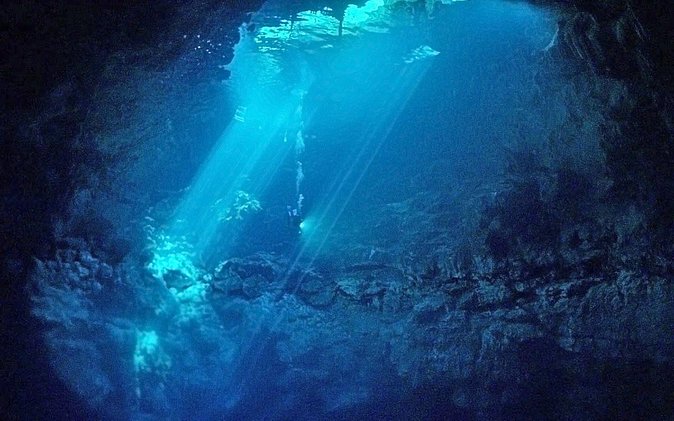
Cenotes are surface openings that connect to subterranean water systems. Long ago, underwater caves began to collapse, opening gateways to underground river systems. The result is a network of sinkholes—cenotes—that connect air, light, and darkness in a way you don’t get in open water.
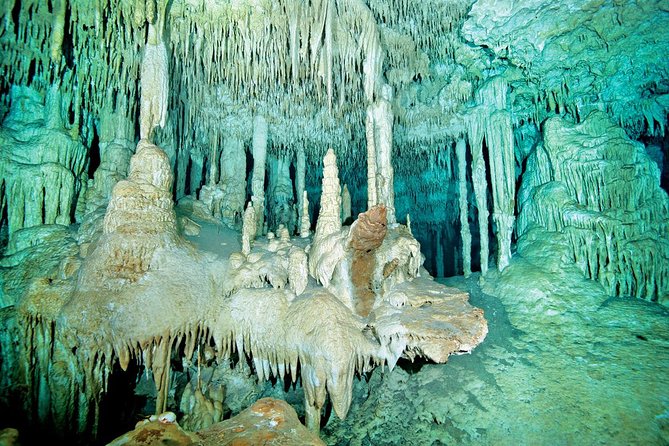
That matters for your comfort. In open water, you can orient by looking at the horizon. In a cenote, you’re often moving through stalactites, stalagmites, and larger cavern chambers where light behaves differently. Even if you’re an experienced diver, it’s the ceiling and walls that change your mental map.
This is also why the pre-water briefing is so important. The tour’s guidance focuses less on showing off every wall feature and more on the rules and procedures you need to handle enclosed spaces smoothly.
The car ride through the Mayan jungle before your first cavern
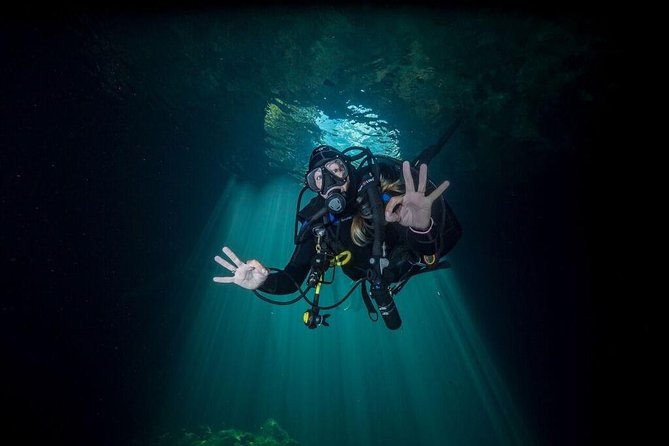
You’re not starting in the cenote parking lot and walking two minutes. You go by car from the dive/meet point area into the countryside, passing through dense Mayan jungle on the way to the first system (the tour typically aims for well-known cenotes such as Dos Ojos).
I like this kind of “transfer first” structure because it keeps the day calm. You can use the ride to review instructions, double-check your gear, and get mentally ready for the underwater environment. And since the itinerary includes multiple stops, the transport is what makes the whole day efficient.
If you’re prone to motion sickness, keep that in mind. The route isn’t described in detail, but you are going by car between cenote locations, so plan accordingly.
Chikin Ha stop: getting oriented in a cavern system
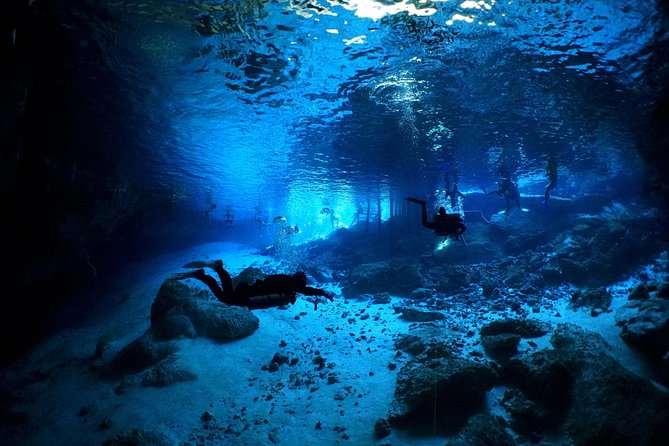
The itinerary includes Chikin Ha as one of the programmed cenote stops. While the specific wall details aren’t spelled out here, the overall tour style is clear: each stop is selected for cavern feel, stalactite and stalagmite formations, and the “light show” effect as you move between darker and lighter pockets.
In practice, the first stop is usually where you’ll do your mental calibration:
- How quickly the light fades as you swim in
- How your breathing and buoyancy feel when you’re surrounded by stone
- How much you rely on the guide for spacing and timing
If you’re the type who needs reassurance, this is a good moment to communicate it before you enter the cavern. Having a clear, friendly explanation early helps the rest of the day stay enjoyable.

Cenotes Dos Ojos: a famous system and the reason many people book
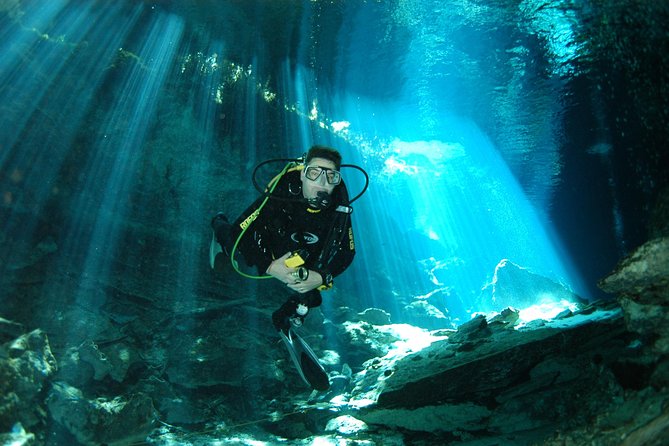
Dos Ojos is one of the best-known cenote systems in the region, and it’s included as a stop on this tour. On tours like this, it’s typically chosen because it delivers big cavern moments and clear, guided routes through formations.
What I like about having Dos Ojos on the schedule is variety. You’re not repeating the same kind of passage. You should expect a mix of:
- Large cavern areas (space to breathe and regain comfort)
- Stalactites and stalagmites that change the texture of the swim
- Light patterns that look almost “layered” when you move at a steady pace
The best tip I can give you here: go slowly. In cavern-like environments, slow swimming reduces stress and keeps you closer to your buddy and the guide’s rhythm.
Jardin del Eden: a second different cavern before you head back
The last listed stop is Cenote Jardin del Eden. The tour is structured so that you do a surface interval for a light lunch and soft drink between stops, then move on to another system afterward.
Even without specific feature descriptions, the tour’s promise is consistent: you’ll experience a second different cavern, not just another look at the same style of chamber. That’s a big reason the itinerary works for many certified divers—you get multiple visual “moods” in one day.
I also like that you’re given a surface break. After your first underwater time, you can reset—warm up, eat something light, and come back feeling ready instead of tired.
Gear, weights, and lamps: what’s included and why it matters in cenotes
This is a practical checklist tour. The price includes:
- Tanks (two air tanks)
- Weights
- Lamps
- Snacks and drinks
- Cenote entrance fees (cenote fee entrance is included)
Equipment rental is not included, so if you need a full set, it’s $25 per person. The tour specifically lists that the rental is extra, which is important. Cenote scuba needs proper sizing and fit, so I’d plan your gear needs ahead of time.
Why do weights and lamps matter? In cavern environments, consistent buoyancy and visible light are your two best friends. If you’re over-weighted or under-weighted, the cavern can feel more stressful because you’re fighting your body rather than enjoying the shapes around you. Included weights and lamps help remove some friction.
The briefing that sets the tone: procedures first, formations second
One detail I really value from this tour description is the emphasis on a “master the rules and procedures” briefing rather than focusing only on wall features. That’s exactly what you want in cenotes: clear guidance on how to move, where to position yourself, and how to manage spacing.
In small groups of four certified divers, the guide’s instructions should carry a lot of weight. Still, cenotes are psychologically different from open water. The ceiling makes everything feel more enclosed, and light can make the cavern look either calm or intimidating depending on your comfort level.
Here’s my direct advice: before you start, ask the guide how they handle nervous divers during instructions and whether they can slow down if someone needs extra reassurance. It’s better to clarify early than to wrestle with stress once you’re already underwater.
Who should book this and who should skip it
This program is clearly for certified divers only. You’ll need to show evidence of your scuba certification to participate.
It’s also set for a minimum age of 15 and a moderate physical fitness level. That moderate level matters because you may be moving through a route with wet gear, some stairs or uneven surfaces around facilities, and the general exertion of changing setups between cenote stops.
Who it suits best:
- Certified divers comfortable with cave-like underwater spaces
- People who like guided structure and a small group
- Divers who want two different underwater systems in one day without juggling logistics
Who should think twice:
- Anyone who panics in enclosed, dark environments. The tour’s negative feedback trend points to the fact that the experience can feel more like a cave than an open, airy underwater swim.
- Anyone who prefers total freedom with no instruction. The day is guided with procedures, and the schedule is paced.
Value check: $159 plus extra fees you should budget for
The headline price is $159 per person, and the tour includes tanks, weights, lamps, snacks/drinks, and cenote entrance. That’s a solid base for a full morning-to-afternoon program.
But two important extras are not included:
- Rental full set equipment: $25 per person
- Boarding & marine park fee: $20 per person
So your true cost depends on whether you need equipment rental. If you’re bringing your own complete setup, you may pay less than the total with rentals, but you should still expect the boarding/marine park fee.
If you’re trying to compare value with other cenote tours, use this method:
1) Start with the included gear and entrance fees (not just the base price)
2) Add the equipment rental only if you truly need it
3) Add the $20 marine/boarding fee since it’s listed as separate
That makes the comparison fair.
Should you book this cenote program in Playa del Carmen?
I’d book this if you’re a certified diver who wants a small-group, guided cenote day with two air tanks, included weights and lamps, and stops at well-known systems like Dos Ojos and Jardin del Eden. The structure—car transfer, briefing, two underwater stops with a surface lunch break—fits a day trip nicely, and the included cenote entrance helps the value.
I wouldn’t book it if you’re uneasy with tight, cave-like interiors or you know you’ll need very gentle, patient support underwater. In enclosed spaces, your comfort matters as much as your gear. If that’s your situation, consider contacting the operator ahead of time and being upfront about your comfort level and what you need from the guide.
FAQ
FAQ
Is this cenote experience only for certified scuba divers?
Yes. You’ll need evidence of scuba certification to participate, and the activity is for certified divers only.
How many people are in each group?
The tour has a maximum of four travelers, so it stays small.
Where does the tour start?
It starts at Scuba Libre, Calle 4 Nte Manzana 3 entre 5a avenida y zona federal maritima, Centro, 77710 Playa del Carmen, Q.R., Mexico.
What time does it start and when does it end?
The start time is 8:30 am, and it ends back at the meeting point around 3:30 pm.
What’s included in the price?
Included are snacks and drinks, two air tanks, weights, a lamp, and the cenote entrance fee.
What equipment is not included, and what does it cost?
Rental of a full equipment set is available for $25 per person.
Are there additional fees besides the $159 price?
Yes. The boarding & marine park fee is listed at $20 per person.
What happens if the weather is poor or I cancel?
The experience requires good weather. If it’s canceled due to poor weather, you’ll be offered a different date or a full refund. It is non-refundable and cannot be changed for any reason.